
- Home
- Hot
- Products
- Application
- About Us
- Technical Guide
- News
- Contact Us
 English
Views: 0 Author: Site Editor Publish Time: 2026-08-08 Origin: Site


Unplanned downtime and high scrap rates in metal manufacturing often stem from a single oversight. Improper slitting setups frequently cause these costly disruptions. Operations regularly bleed efficiency when blades chip, dull prematurely, or leave jagged edges on high-value coils. You might view the metal circular slitting blade as a simple consumable item. However, it acts as a critical variable in throughput efficiency and final edge quality. The wrong tool creates microscopic burrs. It ruins expensive materials. It forces machinery to work harder than necessary. This article clarifies specific industrial applications and evaluates different blade materials for your operations. We provide a practical framework to help you specify the exact tool needed for continuous coil processing. You will learn how core mechanics influence precision cutting. We also explain why proper material matching prevents catastrophic blade failure.
Primary Function: Executing continuous, high-speed shear cuts on metal coils with minimal burr or camber.
Material Matching: Blade material (e.g., Tool Steel, HSS, Carbide) must be paired strictly with the tensile strength and thickness of the target metal.
Evaluation Metric: Success is measured by edge retention, precision tolerances, and the ratio of blade cost to machine uptime.
Implementation: Blade performance relies heavily on proper setup parameters, including horizontal clearance and vertical overlap.
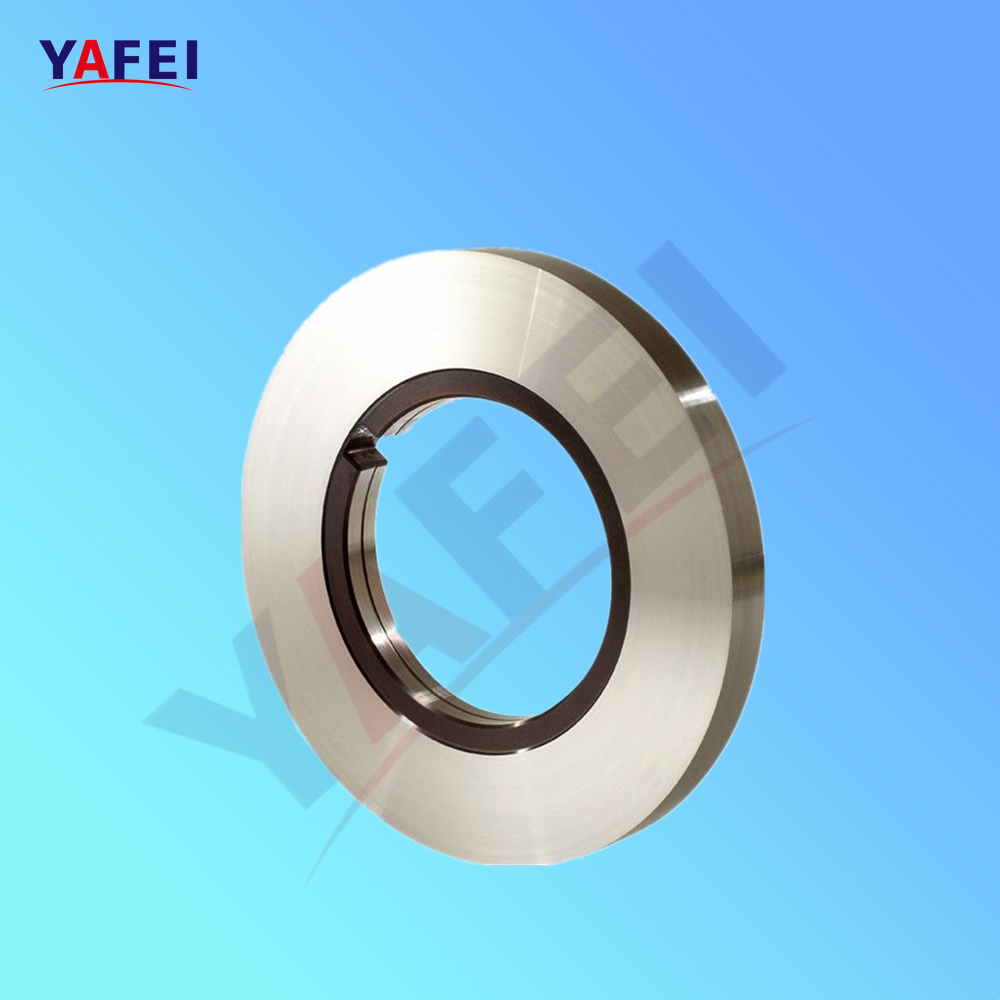
The shear cutting principle dictates how modern slitting machines operate. Upper and lower blades mount onto parallel arbors. They work in tandem to act like continuous, high-speed scissors. The upper blade applies concentrated downward force into the advancing strip. The lower blade provides rigid, opposing support. This synchronized action concentrates immense stress along a microscopic line. The metal ultimately fails along this exact line. A quality rotary cutting blade ensures this failure happens cleanly. Clean fractures prevent edge distortion. They also keep the resulting coil flat.
Metal slitting never involves cutting entirely through the material. The process relies on penetration followed by natural fracture. We can break this physical event down into three distinct phases:
Plastic Deformation: The blade edge presses into the strip. The metal yields and bends slightly downward.
Penetration: The blade sinks into the material. It typically slices through 20% to 40% of the total metal thickness.
Fracture: The internal stresses exceed the metal's shear strength. The remaining unpenetrated material snaps cleanly apart.
Maintaining exact dimensional tolerances in your tooling is an absolute imperative. A blade lacking perfect flatness will wobble during rotation. This microscopic wobble alters the horizontal clearance dynamically during the cut. Inconsistent clearance creates a defect known as camber. Camber turns a straight metal strip into a slight curve. Downstream stamping machines cannot process curved strips. Exact thickness tolerances on the blade prevent this distortion. Precision grinding ensures the blade spins perfectly true. It eliminates material rejection and keeps production moving.
Steel coil processing centers rely heavily on robust tooling to maintain aggressive production schedules. These facilities convert massive master coils into narrower mults. Heavy gauge steel requires tools built for extreme shock resistance. Thick materials generate violent fracturing forces. Conversely, light gauge steel requires incredibly sharp edge profiles. A dull edge will fold thin metal instead of cutting it. The right steel coil slitting knife handles these varying demands. Service centers must swap tooling configurations frequently. They need reliable blades to minimize setup times between different master coils.
Non-ferrous metal manufacturing presents entirely different challenges. Aluminum, copper, and brass are significantly softer than steel. However, they are also much stickier. These materials tend to microscopically weld themselves to the side of the blade. Industry experts call this phenomenon galling. Galling builds up friction. It ruins the smooth edge of the slit strip. To prevent galling, operators use highly polished blade faces. Special surface finishes reduce friction. They allow soft metals to slide past the blade without adhering to it.
Automotive and aerospace stamping demands flawless edge quality. Manufacturers require strict precision metal cutting to avoid downstream failures. A tiny burr on a slit edge creates a dangerous stress riser. When a stamping press forms the metal into a complex shape, it stretches the material. The stress riser causes the metal to split open. Ragged edges also ruin robotic welding processes. Lasers cannot track an inconsistent edge. You must supply perfectly clean strips to these advanced manufacturing cells.
HVAC and construction materials introduce high-volume processing of galvanized steel. Zinc coatings protect the metal from rust. However, zinc is highly abrasive. Continuous slitting of galvanized coils wears down standard edges rapidly. The zinc also flakes off as a fine dust. This dust infiltrates the tooling setup. You must specify wear-resistant materials to handle this constant abrasion. Operators must also clean the arbors frequently. Zinc buildup throws off the horizontal clearances.
Selecting the optimal metallurgy requires balancing objective performance realities against your specific application. No single material excels in every scenario. You must match the alloy to the target metal's physical properties.
D2/D3 Tool Steel
Manufacturers widely consider D2 and D3 as the industry standard for general-purpose slitting. These alloys offer excellent toughness. They resist chipping when encountering hard spots in mild steel. They provide a cost-effective solution for facilities processing standard carbon steels. However, tool steel wears out quickly when facing high-tensile or abrasive materials. You will need to remove and sharpen them more frequently.
High-Speed Steel (HSS)
High-Speed Steel provides superior wear resistance. It withstands the extreme operational heat generated during continuous, high-speed runs. Facilities slitting medium-to-heavy gauge stainless steel prefer HSS. Stainless steel work-hardens as you cut it. HSS maintains its integrity against this challenging characteristic. The primary drawback involves a higher initial acquisition cost compared to standard tool steel. It requires a larger upfront commitment.
Tungsten Carbide
Tungsten carbide delivers maximum lifespan and unparalleled edge retention. It dominates applications involving thin, highly abrasive, or non-ferrous metals. Carbide blades can run for millions of linear feet before requiring maintenance. Despite these advantages, carbide presents notable risks. It possesses high brittleness. If your machine arbors lack absolute rigidity, vibration will shatter the carbide edge. You also face a significantly higher initial investment.
Chart 1: Material Performance Comparison | |||
Blade Material | Wear Resistance | Shock Resistance | Optimal Target Metal |
|---|---|---|---|
D2/D3 Tool Steel | Moderate | High | Mild carbon steel, heavy gauge |
High-Speed Steel | High | Moderate | Stainless steel, medium gauge |
Tungsten Carbide | Exceptional | Low | Silicon steel, thin gauge, aluminum |
Procurement teams must look beyond simple material designations. The physical geometry and finish of the tool dictate its ultimate success on the machine line. You must scrutinize several technical specifications before approving a tooling order.
Surface finish and thickness tolerance directly control the accuracy of your slit strip. A blade needs perfectly parallel sides. If one side deviates by a fraction of a millimeter, the blade introduces wobble. This wobble translates directly into width variations on the final coil. Superior flatness ensures the blade mates perfectly against the spacer rings. A tight fit prevents dust from wedging between the tools. High surface polish also prevents friction heat from warping the blade core.
Edge geometry dictates how the metal separates. You must evaluate different bevel profiles based on your material thickness. Consider these common configurations:
Single-Bevel: Used primarily for lighter gauges. It pushes the burr strictly to one side of the slit strip.
Double-Bevel: Ideal for thicker materials. It centralizes the cutting force. It prevents excessive edge rolling.
Square Edge: Often utilized in ultra-thin foil applications. It relies purely on the shearing action rather than wedging.
Buyers often fall into the trap of assuming harder tools perform better. You must carefully balance the hardness versus toughness ratio. High hardness prevents edge rounding. However, extreme hardness sacrifices shock resistance. When slitting thick, high-tensile alloys, the initial impact creates massive shockwaves. A blade lacking toughness will chip instantly upon impact. You must guide your specification toward materials capable of absorbing these violent impacts. Soft metals allow for higher hardness. Thick steels demand higher toughness.
You must assess the overall scalability of the solution. A premium circular slitting blade requires a larger initial expenditure. You need to determine if it offers enough extended run-time to justify the investment. High-volume environments benefit from premium alloys. They reduce the number of machine stops required for tool changes. The increased uptime quickly absorbs the premium tooling expense. Low-volume, custom-run shops might prefer standard tool steels. They change setups so frequently that maximum wear life becomes less relevant.
Even the highest-quality tooling will fail if installed incorrectly. Setup clearances represent the single biggest risk factor in slitting operations. You must calculate horizontal clearance and vertical overlap flawlessly. Horizontal clearance refers to the gap between the upper and lower blade faces. It usually equals a specific percentage of the material thickness. If you set the gap too tight, the blades scrape against each other. They will chip and generate excessive heat. If you set the gap too wide, the metal bends instead of shearing. The strip will emerge with massive burrs.
Table 2: Common Clearance Failures | ||
Setup Error | Immediate Consequence | Tooling Impact |
|---|---|---|
Clearance too tight | Double shearing and excess dust | Micro-chipping and heat warping |
Clearance too loose | Heavy burrs and edge rollover | Premature dulling of the edge |
Incorrect overlap | Incomplete fracture or tearing | Excessive lateral strain on blade core |
Tooling rigidity heavily influences your outcome. Deflection ruins precise cuts. Worn arbor bearings allow the entire shaft to move during operation. Improperly cleaned spacers introduce microscopic gaps. These gaps compound across the length of the arbor shaft. When the metal hits the cutting zone, the blade deflects sideways. A premium metal slitter knife cannot compensate for sloppy machine conditions. You must maintain strict cleanliness protocols in the tooling room. Operators must wipe down every spacer and blade face before assembly.
You must master regrinding economics to maintain profitability. Every blade follows a specific lifecycle. As edges dull, operators pull them from the machine. Tooling technicians grind away the worn material to restore a sharp edge. However, you must evaluate when to regrind versus when to replace. Regrinding reduces the outer diameter of the blade. Smaller diameters require deeper arbor plunging to maintain the correct vertical overlap. Eventually, the blade becomes too small to process thick materials safely. Technicians must strictly track the diameter of every tool. They must group blades of identical diameters onto the same arbor. Mixing diameters on a single shaft causes disastrous uneven cutting.
Choosing the right tooling requires a matrix approach. You must cross-reference your target material thickness against its tensile strength. You then factor in the absolute rigidity of your current machinery. Soft metals demand high polish and extreme sharpness. Heavy, high-tensile steels require robust toughness and precise clearance gaps. Ignoring any single variable leads directly to rejected material.
We advise procurement and engineering teams to audit their current scrap rates immediately. Identify which specific coils consistently produce burred edges or camber defects. Document the tooling setup used during those failures. Next, consult a specialized tooling manufacturer. Ask them to specify exact tolerances and material grades tailored to your specific slitter line. Upgrading your material selection and tightening your setup parameters will drastically improve your continuous processing capability.
A: A slitting blade rotates on an arbor. It performs a continuous, high-speed rotary cut along the length of a moving coil. A shearing blade operates linearly. It drops down in a guillotine motion to chop the metal across its width. Slitting separates materials longitudinally, while shearing typically cuts them to a specific length.
A: Lifespan varies immensely. Industry professionals measure it in linear feet cut rather than time. It depends entirely on the metal grade being processed, the blade's alloy composition, and proper clearance setup. A well-maintained carbide blade slitting thin silicon steel might last millions of feet. Tool steel cutting thick, abrasive galvanized steel wears out much faster.
A: We strongly advise against this practice. Aluminum requires highly polished faces to prevent sticking. Stainless steel requires extreme wear resistance. Furthermore, cutting aluminum leaves soft deposits on the edge. If you switch to stainless, these deposits alter the clearance. You should dedicate specific tooling sets to distinct material types.
A: Burrs typically result from three common culprits. You might have dull edges failing to initiate a clean fracture. You might have calculated the horizontal clearance too widely, allowing the metal to bend rather than snap. Finally, your arbor bearings might be worn, allowing the blade to deflect under pressure.


