
- Home
- Hot
- Products
- Application
- About Us
- Technical Guide
- News
- Contact Us
 English
Views: 0 Author: Site Editor Publish Time: 2026-08-22 Origin: Site


Selecting a corrugated cardboard slitting knife rarely involves finding the absolute cheapest tool on the market. Experienced operators know cheap components often cause massive production headaches down the line. You ultimately want to minimize costly line downtime during critical shifts. You also want to prevent damaging edge crush during heavy production runs. These tiny tooling decisions deeply impact your entire manufacturing schedule. A smart purchasing strategy balances upfront blade investments against expected lifespan. You must deeply consider scrap reduction and daily maintenance frequency. Facilities face immense pressure to keep packaging lines running smoothly day and night. Every unexpected pause eats directly into operational margins. We built this comprehensive guide to give you an objective, technical framework. Plant managers and procurement teams can use it to confidently evaluate industrial slitting tools. You will learn how to assess material choices and edge geometry properly. We also cover crucial supplier qualifications to help secure your long-term supply chain.
Material selection (e.g., Tungsten Carbide vs. HSS) dictates blade longevity and replacement intervals; higher upfront costs often yield lower TCO in continuous runs.
Blade geometry directly impacts Edge Crush Test (ECT) scores and dust generation—critical metrics for packaging compliance.
Evaluating supplier capabilities should go beyond unit price, factoring in OEM tolerance matching, custom edge profiles, and reliable inventory for wear parts.
Inferior blades secretly drain your facility's operational budget every single hour. They degrade overall profitability through constant micro-chipping and excessive friction. Operators frequently notice a sudden drop in cut quality during their shifts. They might try adjusting line speeds to compensate for dull tools. This manual tweaking rarely solves the root issue. It simply wastes valuable shift time and creates unnecessary frustration. Plant managers must monitor specific performance indicators to catch failing tools early. A subpar cardboard slitter blade creates ripple effects across downstream packaging steps. Let us examine three vital metrics you need to track daily.
Edge Quality and Scrap Rates: Clean cuts maintain the vital structural integrity of every finished box. Dull tools crush the inner fluting layers entirely during penetration. We call this destructive phenomenon "fluting crush." It drastically lowers box strength and ruins external aesthetic appeal. Secondary packaging processes require perfectly straight edges to function properly. Crooked or crushed edges force automatic folder-gluers to jam continuously. High scrap rates quickly destroy your daily production targets and waste raw material.
Dust Generation: Paper dust presents a massive operational hazard on the factory floor. Tearing actions create tiny airborne particles instead of clean slices. This dust accumulates deep inside your machinery housing and electronics. Operators must pause production frequently to clear the air and sweep the line. Dust also acts like an abrasive powder on moving metal parts. It works into expensive machine bearings and causes premature mechanical failure. Clean slicing actions generate significantly less airborne paper debris.
Changeout Downtime: You lose serious money every time a high-speed corrugator stops running. Maintenance crews need time to safely swap out dull blades. We measure this lost production time in pure dollars per minute. Consider the mechanical complexity of a modern corrugating line. Heating elements begin to cool off while the machine sits idle. Tension settings lose their perfect calibration during the swap. Restarting the line generates even more scrap material as things get back up to speed.
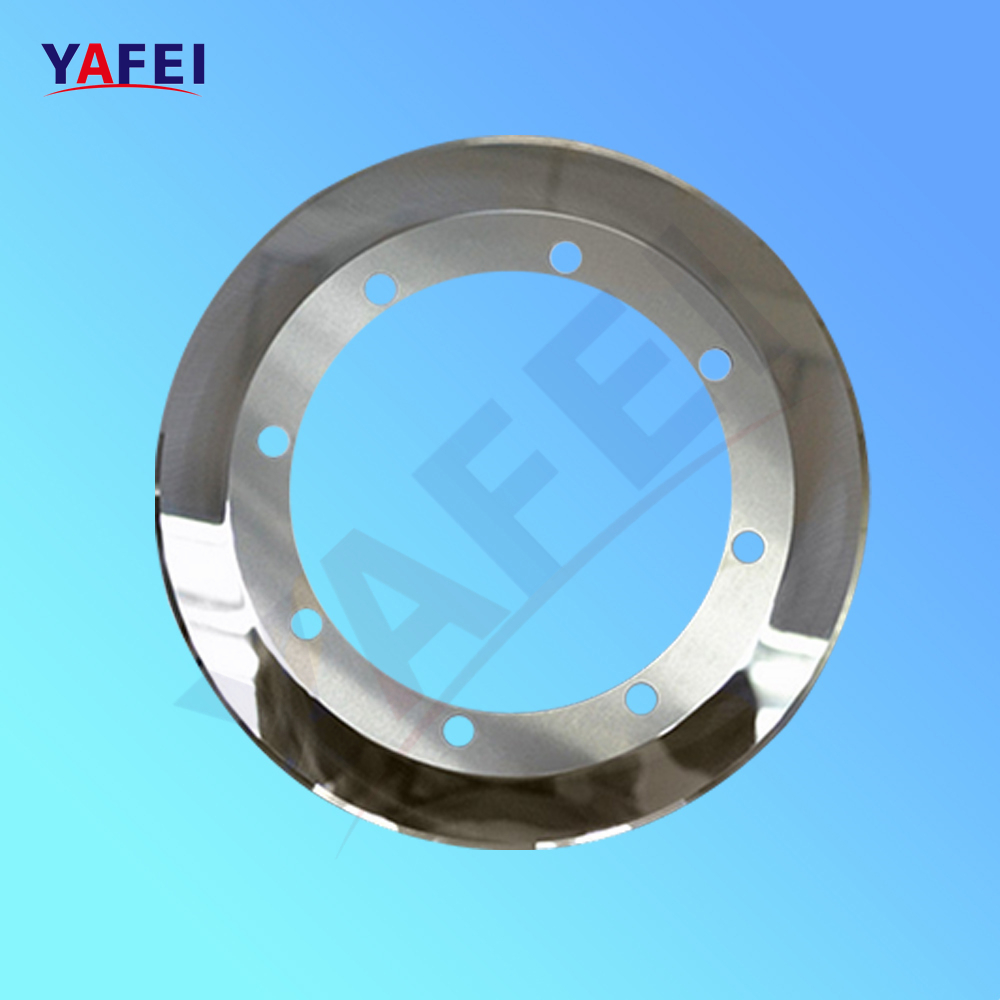
Selecting the right raw material fundamentally changes your production cadence. No single material solves every cutting problem perfectly across the board. You must carefully match the steel chemistry to your exact application. A premium carbide slitting knife excels in specific high-wear environments but fails in others. Let us compare the two most dominant industrial options available today to help clarify your purchasing path.
Tungsten carbide offers extreme hardness and unparalleled wear resistance under pressure. These tools slice cleanly through highly abrasive recycled paperboard materials. Recycled boards contain microscopic impurities like sand, metal flakes, and glass. Standard steel dulls almost instantly against these hidden, abrasive particles. Carbide holds its factory edge remarkably well under constant, high-speed friction.
However, extreme hardness comes alongside a distinct structural vulnerability. Carbide remains a highly brittle material compared to traditional steels. It shatters or micro-fractures easily under sudden impact or side loading. Poor machine alignment often causes these catastrophic fractures during standard operation. Operators must handle these tools incredibly gently during routine installation procedures.
You see the best returns in high-volume, continuous manufacturing environments. Minimizing frequent changeouts easily justifies the higher initial investment. These specialized tools cost more upfront to acquire. Yet, they run exponentially longer when aligned correctly on rigid machinery. They dominate large-scale facilities prioritizing uninterrupted runtime.
High-Speed Steel (HSS) provides incredible toughness and excellent shock absorption. Tool steels like D2 and M2 resist sudden impact exceptionally well. They forgive minor misalignments on older or less rigid machinery frameworks. These blades will roll or dent slightly instead of shattering completely. Operators appreciate how easily they handle rough, unpredictable operating conditions.
These materials fit perfectly into shorter, highly variable production runs. You might need specialized custom cuts requiring frequent tool adjustments. They also shine in environments facing high contamination risks. Accidental staple strikes destroy brittle tools instantly upon contact. HSS survives these unexpected impacts far better, allowing you to finish the shift.
Material Performance Comparison Chart | |||
Material Grade | Wear Resistance | Impact Toughness | Ideal Application |
|---|---|---|---|
Tungsten Carbide | Extremely High | Low (Brittle) | Continuous runs, recycled abrasive paper |
High-Speed Steel (HSS) | Moderate | High | Shorter runs, older machinery |
Tool Steel (D2 / M2) | Good | Very High | High contamination risk environments |
Physical blade features directly translate into tangible operational outcomes on the floor. A standard circular cardboard knife requires precise geometric angles to perform well. Different paper thicknesses demand entirely different edge designs for optimal penetration. You cannot use a universal approach for diverse packaging materials. Engineers spend countless hours optimizing these tiny angles.
Bevel angles dictate how the tool pushes material aside during penetration. Understanding this mechanical action helps you reduce unwanted friction.
Single Bevel edges provide unparalleled precision slicing capabilities. They encounter minimal resistance as they push cleanly through standard materials. Operators strongly prefer single bevels for running standard single-wall corrugated board. The asymmetrical shape pushes waste clearly to one side of the line. It leaves the finished product edge incredibly clean and visibly sharp. You rarely see crushed flutes using this specific geometry.
Double Bevel designs offer superior overall durability for extreme applications. They utilize a perfectly symmetrical force distribution during heavy cutting actions. This balance proves crucial for a dense paperboard cutting blade processing multi-wall materials. Multi-wall boards exert massive pressure against the steel tool body. Double bevels resist this side-load pressure effortlessly without bending. They track perfectly straight through exceptionally thick materials without wandering off course.
The actual cutting perimeter determines your dust volume and penetration power. Choosing the wrong profile introduces massive inefficiencies.
Straight razor edges deliver a smooth, continuous slicing action. They generate the lowest possible dust volumes on your entire line. You get a beautifully clean finish on virgin kraft papers. They rely purely on extreme sharpness to part the paper fibers. Maintaining a straight edge requires diligent calibration and perfect backing surfaces.
Scalloped or toothed edges use a slightly different mechanical approach. They grab and puncture the outer liner before completely slicing the fluting. This aggressive action provides much better penetration on exceptionally thick boards. It also helps slice through heavily glued seams safely without bogging down the motor.
Common Edge Profiles Guide | ||
Profile Type | Primary Benefit | Best Used For |
|---|---|---|
Straight / Razor | Minimal dust, extremely clean finish | Standard corrugated, single-wall, virgin kraft |
Scalloped | Aggressive penetration, reduced drag | Multi-wall, heavily glued boards, thick stock |
Toothed | Puncture capability, prevents slippage | Specialty heavy-duty industrial packaging |
Purchasing reliable tooling requires looking far beyond simple unit prices. You must deeply evaluate your vendor's actual manufacturing capabilities and quality control. A trustworthy corrugated board knife supplier acts as a true operational partner. They help secure your critical supply chain against unexpected global disruptions. Partnering with the right manufacturer prevents disastrous factory shutdowns.
Your replacement tools must match strict dimensional tolerances perfectly every time. Pay close attention to runout, flatness, and concentricity measurements during evaluation. Even microscopic dimensional deviations cause wobbly cuts and heavy machine vibrations. High-speed slitter-scorers demand absolute geometric perfection to function correctly. Major machinery brands like BHS, Fosber, and Marquip operate at blistering speeds. Aftermarket engineering teams must meet or exceed original OEM specifications consistently. Request detailed quality assurance reports from your chosen vendors before ordering.
Specialized coatings drastically improve performance in notoriously sticky manufacturing environments. Slitting moisture-resistant or heavily adhesived boards creates massive headaches for operators. Glue buildup quickly ruins a perfectly sharp edge and increases drag. Titanium Nitride (TiN) hardens the steel surface and reduces friction significantly. Teflon coatings actively prevent harsh industrial adhesives from sticking to the steel. Evaluate whether your specific paper grades require these advanced chemical treatments. The extra investment often prevents hours of manual blade scraping.
Stockouts pose a severe risk to your entire packaging operation. You cannot afford to shut down because you lack basic wear parts. Evaluate potential suppliers based on their long-term blanket order capabilities. Look for partners offering robust, verifiable local stocking programs. Transparency regarding raw material inventory levels builds essential long-term trust. Ask them explicitly about their typical lead times for custom edge profiles. Reliable tooling partners hold backup inventory specifically for your facility.
Buying a premium tool represents only the first step toward operational excellence. What happens after the purchase determines your true success rate. Many facilities ruin expensive tools through improper daily handling and poor maintenance. Let us explore the harsh realities of shop-floor maintenance routines.
Mishandling ultra-sharp carbide tools causes immediate problems before production even begins. Dropping a brittle tool during installation remains the number one cause of premature micro-fractures. Operators must follow strict safety and handling protocols at all times.
Always wear heavy-duty cut-resistant gloves during every machinery changeout.
Never rest exposed sharp edges directly against hard metal workbenches or concrete floors.
Use dedicated, padded storage racks to keep tools separated safely in the tool crib.
Inspect every single edge visually for hairline cracks before mounting it.
Ensure mounting hubs remain completely free of debris before tightening bolts.
Even the greatest tool fails immediately if your machine lacks proper calibration. The slitter anvil or bottom backing roll must remain perfectly smooth. Worn backing rolls create uneven cutting pressure instantly across the web. Over-tensioning causes severe tool deflection during the cutting process. Deflection forces the edge to bend sideways under heavy load. This bending leads directly to crooked cuts and snapped tips. Maintenance teams must routinely dial in machine tolerances using precision dial indicators.
You must logically decide how to handle dull tools strategically. Some facilities implement a dedicated in-house regrinding program to save money. This approach requires specialized grinding machinery and highly skilled maintenance labor. Others choose to outsource sharpening completely to specialized local tool shops. Outsourcing guarantees perfect angles but introduces logistical shipping delays. Finally, some high-volume facilities treat thin tools purely as consumable throwaways. Throwaways eliminate maintenance labor completely and ensure factory-fresh geometry every time. Analyze your annual usage rates carefully to build a profitable framework.
Selecting the ideal slitting tool demands a highly strategic approach. You must first assess your primary operational bottleneck thoroughly. Identify whether paper dust, edge crush, or changeout frequency causes the most pain. Choose your steel material and edge geometry specifically to solve that exact bottleneck. Finally, thoroughly vet your supplier for strict engineering tolerances and reliable inventory management. Take action today by auditing your current tool changeout frequency. Contact a dedicated tooling specialist for a professional material grade consultation or request a trial run of a new blade profile. You will see immediate improvements in overall line efficiency.
A: Lifespan varies heavily based on your specific application and operating environment. You should measure longevity in total linear feet cut rather than calendar days. Highly abrasive recycled paper degrades tools much faster than pure virgin kraft paper. Faster line speeds also generate more heat, significantly reducing overall longevity. Clean materials and well-maintained machinery allow carbide tools to run continuously for several million linear feet before requiring replacement.
A: Start by evaluating your current edge profile and geometry. Switch to a razor-style circular tool featuring a highly polished surface finish. Smooth surfaces create far less friction during penetration. You must also ensure perfect alignment between the tool and the backing anvil. Misalignment violently tears the paper fibers instead of slicing them cleanly, generating massive amounts of airborne particulate.
A: Drag knives serve a very specific, limited purpose in the packaging industry. Facilities typically use them on flatbed CNC machines for short custom packaging runs. They work well for creating one-off product samples and prototypes. High-speed inline corrugators cannot use stationary drag tools effectively. Industrial manufacturing lines rely exclusively on powered, rotating circular tools to process continuous lengths of board efficiently.
A: Thick HSS circular tools handle resharpening exceptionally well. They retain enough structural integrity after grinding to remain useful for months. However, we rarely recommend resharpening ultra-thin carbide razor tools. The aggressive grinding process removes critical material, instantly altering the tool's original dimensional specifications. Dimensional loss directly compromises strict OEM tolerances and leads to crooked cuts on your main production line.


