
- Home
- Hot
- Products
- Application
- About Us
- Technical Guide
- News
- Contact Us
 English
Views: 0 Author: Site Editor Publish Time: 2026-09-10 Origin: Site


Modern packaging lines demand flawless execution every single day. Suboptimal cutting setups directly result in costly film waste. They compromise seal integrity and cause unplanned machine downtime. You cannot afford to ignore these serious operational stakes. Selecting the right flow wrapping machine blade requires careful technical evaluation. You must match blade geometry to your specific film composition. Line speed also dictates the necessary edge profile perfectly. You must properly evaluate serrated versus straight configurations. This guide establishes a reliable technical framework for your operations. It helps you evaluate, specify, and implement tools correctly. You will learn to choose a serrated packaging knife without relying on manufacturer hyperbole. We will explore how to diagnose poor cut performance immediately. We will also examine critical material selection for high-volume runs. Furthermore, we cover crucial installation and maintenance realities. You will understand how anvil interactions affect your daily operations. This knowledge ensures consistent performance and minimizes material waste.
Film Dictates the Blade: Serrated edges excel in multi-layer laminates and metalized films where straight blades often snag or require excessive pressure.
Consumer Experience vs. Line Speed: Serrated profiles create "easy-tear" openings crucial for consumer goods (snacks, bakery) while maintaining high-speed horizontal flow wrapping efficiency.
Tolerances Matter: Improper anvil alignment with a serrated flow pack cutter accelerates wear and compromises the end seal.
Identify the early symptoms of failing tools to protect your operations. You might notice jagged edges on finished retail packages. Incomplete cuts often leave multiple packages connected in a long chain. Unwanted film buildup on the sealing jaws serves as a major warning sign. Premature edge wear indicates a misapplied packaging machine knife. These frustrating symptoms disrupt your entire daily production schedule. They force operators to halt the high-speed line constantly. You lose valuable time troubleshooting these preventable mechanical issues.
Consider the severe cost of operational inaction. Minor inefficiencies cascade into massive production bottlenecks quickly. Frequent recalibrations steal dozens of hours from your production week. Reduced throughput means you miss critical client shipment deadlines. Product spoilage increases dramatically when seals fail to close. Oxygen enters the compromised package and ruins perishable goods immediately. Every incomplete cut wastes expensive packaging material unnecessarily. You discard perfectly good products due to bad end seals.
We must define clear success criteria for your equipment. A successful implementation yields clean severing at your target speeds. It delivers predictable wear cycles for better maintenance planning. It ensures precise compatibility with your primary film stock. You should track these specific performance metrics carefully.
Achieve clean severing without manual operator intervention.
Maintain target line speeds consistently throughout the shift.
Establish predictable wear cycles for scheduled tooling changeouts.
Ensure precise compatibility between tooth geometry and film stock.
Meeting these criteria guarantees a smoother manufacturing process. You eliminate guesswork and rely on proven mechanical performance. Consistent performance minimizes operator stress and maximizes factory output.
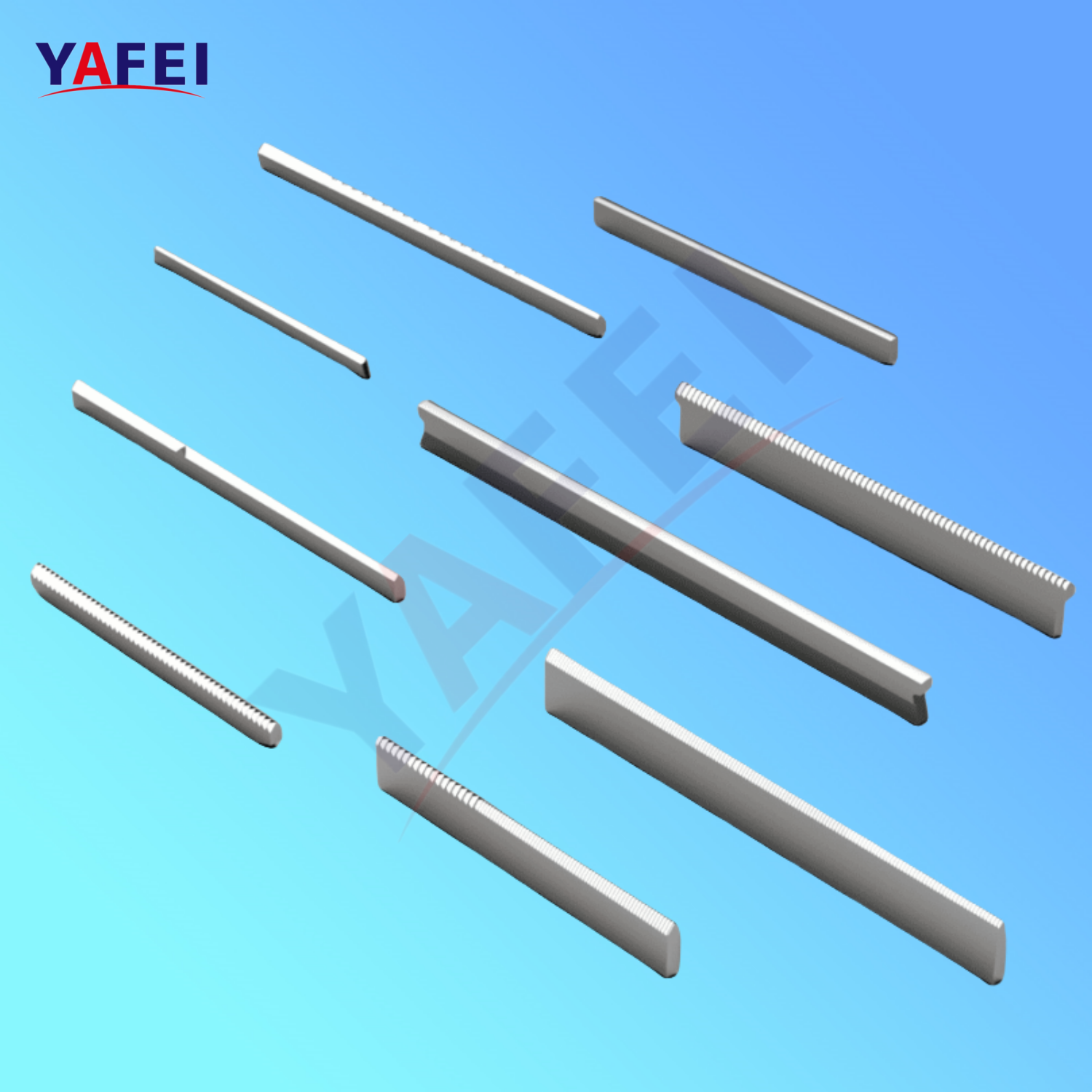
Let us thoroughly examine the straight edge profile first. Straight blades work best for single-layer, thin plastic films. They slice highly elastic films cleanly and efficiently. You choose them when aesthetic slicing remains paramount. A straight edge leaves a perfectly smooth, straight package border. However, straight profiles possess distinct mechanical limitations. They are prone to slipping on thicker laminate materials. They require extremely high precision regarding anvil alignment. Even minor misalignments cause ugly tearing instead of clean slicing.
The serrated edge profile offers a highly robust alternative. The mechanical design relies on strategic point-force distribution. Serrations concentrate massive cutting force at the sharp tooth points. They easily pierce tough flexible packaging blade materials. Materials like BOPP or multi-layer foils succumb quickly. The sharp teeth initiate the cut before the full blade body engages. This action prevents the film from sliding laterally across the jaws.
The primary advantage lies in profound consumer convenience. Serrated profiles create a consumer-friendly zigzag tear point automatically. This zigzag notch makes opening the package effortless. They also offer a significantly wider operational tolerance during the cut phase. The teeth grip the film securely and prevent unwanted slipping.
How do you apply this critical shortlisting logic? You must audit your current material specifications accurately. You must evaluate your packaging line speed requirements. Tougher films strongly justify the transition to a serrated design. High-speed lines benefit immensely from the reliable grip of serrated teeth.
Technical Feature | Straight Edge Profile | Serrated Edge Profile |
|---|---|---|
Ideal Film Material | Single-layer, thin, highly elastic films | Multi-layer laminates, BOPP, metalized foils |
Anvil Alignment Tolerance | Requires extremely high precision | Offers wider operational tolerance |
Primary Operational Advantage | Clean, aesthetic, smooth slicing | Easy-tear points, pierces tough barriers |
Main Mechanical Limitation | Prone to slipping on thick laminates | Can crush seals if severely misaligned |
Snack and bakery applications demand highly specific blade configurations. Serrated designs are the undisputed industry standard for chip bags. They package individually wrapped baked goods flawlessly every time. Why do these massive industries prefer serrations exclusively? They balance high-speed processing with vital easy-open functionality. Nitrogen-flushed snack bags require precise, puncture-free end sealing. The serrated edge severs the film cleanly without popping the inflated bag. Consumers demand instant access to these popular snacks. The zigzag cut delivers that necessary, frustration-free convenience.
Rigid and bulky items require very special mechanical attention. Consider disposable cutlery sets or irregular hardware parts. You must adapt the horizontal flow wrapping blade accordingly. Rigid items cause irregular shapes in the moving film tube. Film tension fluctuates wildly during the critical sealing phase. A straight edge might slip entirely when tension drops unexpectedly. Serrated teeth catch the loose film reliably. They pull the material taut and slice it cleanly.
Multi-layer and metalized films pose another serious mechanical challenge. These advanced films form tough environmental protection barriers. They protect sensitive products from moisture and oxygen degradation. Straight edges often struggle to penetrate these dense, complex layers. You need precise serrated tooth geometry to pierce tough barriers. The sharp points break the strong outer layer instantly. The rest of the tooth slices smoothly through the inner layers. They achieve this clean severing without crushing the critical end seal. Crushed seals leak gas and ruin the expensive product inside.
Evaluating metallurgy is absolutely essential for high-volume production runs. You must select robust materials based on harsh operational realities.
D2 Tool Steel: This forms the standard baseline for general-purpose applications. It offers a highly reliable balance of toughness and durability. You use D2 for standard films running at moderate speeds.
High-Speed Steel (HSS): HSS provides superior wear resistance characteristics. You need it for continuous, high-heat sealing operations. It maintains its sharp edge much longer under intense thermal stress.
Tungsten Carbide: Carbide offers maximum longevity for highly abrasive films. Paper-backed or matte-finish films dull standard steel rapidly. Carbide resists this harsh abrasion perfectly. However, it remains brittle and requires extremely precise handling.
Tooth profile geometry also demands your immediate technical attention. You must decide carefully between micro-serrations and macro-serrations. Micro-serrations prioritize overall package aesthetics. They leave a subtle, clean-looking edge on the plastic. Macro-serrations handle heavy-duty tearing requirements effectively. They create prominent, deep notches for thick, stubborn foils.
You must assess supplier claims rigorously before purchasing. Verify Rockwell Hardness (HRC) claims through independent testing protocols. Demand full transparency regarding applied surface coatings. Coatings like TiN or PTFE reduce surface friction significantly. Reduced friction prevents melted film buildup on your flow pack cutter. A cleaner cutter ensures continuous, uninterrupted, high-speed production.
The delicate anvil interaction determines your overall operational success. Serrated designs require precise clearance matching against the rotating anvil. Too tight clearance causes rapid, premature blunting. The delicate teeth smash directly against the anvil and deform permanently. Too loose clearance results in frustrating, incomplete cuts. You get hanging chads connecting the finished packages together. Operators must manually separate these connected packages.
Thermal expansion variables complicate the installation process further. You must account for heated sealing jaws in flow wrappers. Heat transfers continuously from the hot jaws to the blade mechanism. The metal expands noticeably as the operational temperature rises. This dynamic expansion alters the critical blade-to-anvil tolerances. A tool set perfectly at room temperature may bind when hot. You must always calibrate clearances at actual operational temperatures.
Establish strict, proactive maintenance protocols immediately. Do not wait for visual cut degradation to occur. Visual degradation means you are already producing bad seals. Establish strict changeout schedules based strictly on machine cycle counts. Track exactly how many cuts a tool performs flawlessly. Replace it proactively before it reaches its known failure point.
Consider resharpening versus replacing strategies carefully. Attempting to resharpen a serrated profile is highly risky. The complex tooth geometry remains exceptionally difficult to restore accurately. Uneven, hand-sharpened teeth cause uneven cutting pressure. It is usually much wiser to treat them as basic consumables. Replacing the entire unit guarantees perfect, factory-spec geometry.
Blade selection represents a careful, highly technical calculation. You must rigorously balance film type against machine speed. You must also consider the ultimate consumer end-use experience. Serrated edges excel when handling incredibly tough laminates. They create the convenient easy-tear openings consumers demand today. They maintain line efficiency without sacrificing package aesthetics.
Operations managers must take specific, proactive steps immediately. Audit your current scrap rates to identify hidden cutting bottlenecks. Request physical sample blades for supervised trial runs. Consult specialized suppliers offering application-specific metallurgy solutions. Avoid relying completely on off-the-shelf, generic options. Use precise, verifiable data to optimize your packaging machinery. Proper technical selection minimizes unplanned downtime. It maximizes product quality and protects your operational bottom line.
A: Longevity is measured strictly in cycle counts rather than exact timeframes. It depends entirely on film abrasiveness, operating speed, and blade metallurgy. High-Speed Steel outlasts standard carbon steel significantly during high-heat runs. Highly abrasive matte films wear teeth down faster than standard BOPP. You must track your operational cycle counts carefully. This tracking establishes a reliable baseline for your specific machinery. Implement scheduled replacements based on these recorded counts.
A: Yes, you can successfully use serrated edges on cold seal films. However, you must specify the tooth pitch very carefully. Incorrect pitch geometry damages the pressure-sensitive adhesive zones. It compromises the final package integrity. Work closely with your supplier to ensure precise geometry. The teeth must pierce the film cleanly. They must avoid smearing the cold seal adhesive during the severing phase. Proper specification prevents costly material waste.
A: This frustrating issue usually indicates implementation errors. It rarely stems from a flaw in the blade design itself. It is often a primary symptom of improper anvil alignment. Insufficient cutting pressure also causes severe seal crushing. Dulling teeth fail to pierce the film efficiently. They push and smash the material instead of slicing it. You should check your anvil clearance immediately. Replace any worn blades to restore clean severing.


