
- Home
- Hot
- Products
- Application
- About Us
- Technical Guide
- News
- Contact Us
 English
Views: 0 Author: Site Editor Publish Time: 2026-07-06 Origin: Site


High-speed paper manufacturing, commercial printing, packaging, and bookbinding operations rely entirely on edge precision. A single micro-fracture or dull edge halts production lines, ruins entire master rolls, and causes massive downstream bottlenecks. Poor blade selection leads to excessive cutting pressure, unacceptable dust formation, jagged edges, short blade lifespans, and frequent machine downtime for blade changes. Selecting the correct industrial blade requires matching metallurgical properties, knife construction, and bevel geometries to specific paper grades and converting processes. This guide breaks down the technical applications, evaluation criteria, and lifecycle management of industrial paper knives. We examine how to match blade geometry to material density, machine speed, and specific converting applications to maximize yield and minimize mechanical wear.
Application Specificity: There is no universal blade; paper cutting knives, sheeter knives, circular slitter blades, and guillotine knives serve distinct mechanical functions requiring specific edge profiles, bores, and thicknesses.
Downstream Alignment: Knife selection must account for the downstream application—whether processing raw paper rolls in manufacturing, trimming bulk reams in printing and bookbinding, or converting packaging boards.
Material Dictates Yield: The choice between Standard Tool Steel, High-Speed Steel (HSS), and Tungsten Carbide (either solid or inlaid) directly impacts blade lifespan, sharpening intervals, and overall operational efficiency.
Dust and Edge Quality: Optimal blade geometry reduces cutting pressure, which minimizes paper dust generation—a critical compliance, printability, and operational safety metric.
Maintenance is Non-Negotiable: Even premium paper industry knives fail prematurely without strict alignment protocols, proper handling, and scheduled, coolant-backed regrinding.
Defining a successful cut in industrial paper processing requires looking at multiple variables on the factory floor. Zero edge crushing is the primary goal. You want exact dimensional tolerance across the entire web, whether running at 500 or 2,500 feet per minute. Clean fiber separation ensures the final product looks professional and feeds correctly into downstream printing presses. Minimal dust generation keeps the machinery running smoothly and prevents sensor fouling. When you achieve these criteria, the production line operates at maximum efficiency. Operators spend less time troubleshooting web breaks and clearing jams. The final paper product meets strict quality control standards. Any deviation from these metrics signals a mechanical problem with the cutting tool.
The mechanical stresses involved in processing paper vary wildly depending on the station. Slicing requires a smooth, continuous motion with minimal drag. Slitting divides large webs into narrower sections under constant tension, demanding absolute concentricity. Scoring and creasing displace material without breaking the surface, requiring polished, rounded profiles. Cutting and trimming sever bulk sheets with immense downward force, testing the impact resistance of the steel. Each action places different demands on the blade edge. A blade designed for shear slitting fails quickly if used for crush slitting. Understanding these physical forces dictates proper tool selection and prevents catastrophic blade failure mid-run.
Sub-optimal cutting tools create massive inefficiencies that compound throughout the shift. Wasted material piles up quickly when edges are jagged or dimensions drift. Spoilage directly impacts the operational yield of the facility. High cutting pressure increases wear on machine bearings, drive shafts, and spindles. This leads to premature mechanical failures and extensive repair work that takes the machine offline for days. Labor hours increase when operators must constantly change dull blades or adjust tension to compensate for poor cuts. Frequent changeovers disrupt the entire production schedule. The operational impact of these disruptions far outweighs the initial investment in high-quality Knives For Paper Industry.
Blade sharpness directly correlates to dust formation, a major issue in any paper mill. A dull edge tears the paper fibers instead of slicing them cleanly. This tearing action releases microscopic cellulose particles into the air. Paper dust compromises printability by interfering with ink adhesion and clogging print heads. It also affects coating applications on specialty papers, causing surface defects. More importantly, airborne paper dust presents a severe safety hazard. Combustible dust compliance is a major regulatory concern in manufacturing facilities. Maintaining optimal bevel angles and sharp edges mitigates this risk significantly by keeping the cut clean and the dust contained.
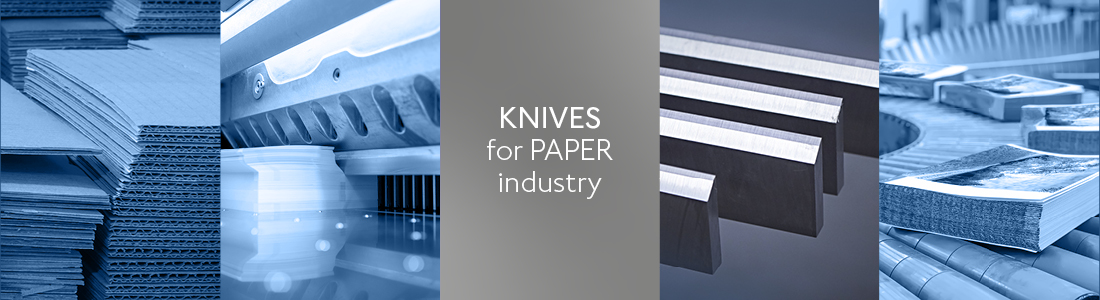
These heavy-duty tools handle bulk sizing tasks across the industry. They trim massive reams of paper in commercial settings, slicing through thousands of sheets simultaneously. Bookbinding operations rely heavily on them for final finishing and squaring off book blocks. paper cutting knives require exceptional impact resistance to survive the sudden shock of hitting the paper stack. They strike the cutting stick with immense force during each cycle. The bevel angle must match the paper density perfectly. Lightweight coated papers need a different angle than heavy uncoated cardstock or recycled board. An incorrect bevel leads to blade deflection, uneven cuts, and a phenomenon known as "draw," where the bottom sheets are pulled out of alignment.
Continuous web applications use these tools to process master rolls directly off the paper machine. They slit wide parent rolls into narrower consumer formats like receipt paper, label stock, or packaging film. paper slitting knives operate in specific configurations depending on the material. Shear slitting uses top-and-bottom pairs acting like scissors, requiring precise overspeed settings. Crush slitting presses a blade against a hardened anvil cylinder, relying on pressure to separate the web. circular slitter blades demand extreme concentricity to function properly. Precise bore sizing prevents wobbling during high-speed rotation. Tight runout tolerances are mandatory for clean, straight slits without edge wave.
Converting continuous webs into specific sheet lengths requires specialized, highly rigid equipment. sheeter knives perform this cross-cutting action at extreme speeds, often utilizing rotary drums. They span wide sections of the paper web, sometimes exceeding 100 inches. The cutting edge must remain perfectly straight across this entire span under heavy centrifugal loads. Any deviation causes skewed cuts, dimensional inaccuracies, and rejected pallets. A warped blade causes web jams and sheet-to-sheet variation that ruins downstream printing registration. Rigidity, precise mounting, and dynamic balancing are critical for these long blades.
Folding cartons and packaging rely on these specialized blades to create hinges and tear lines. Bindery operations use them for creating tear-away sections in forms and mailers. These tools do not sever the material completely. They displace, weaken, or partially cut the paperboard. The goal is to maintain the overall structural integrity of the sheet while allowing it to fold or tear predictably. Creasing blades must compress the fibers without cracking the surface coating, which requires exact profile matching to the anvil matrix. Perforating blades need exact tooth geometries and tie ratios for consistent tear strength across the entire web.
Standard carbon or tool steel works well for low-volume applications where speeds are manageable. It is also suitable for highly abrasive recycled papers. These papers contain tramp metal, sand, and debris that quickly chips harder, more brittle materials. In these cases, frequent, inexpensive replacements make operational sense over risking expensive alloys. High-Speed Steel (HSS, D2, M2) provides a better balance for general converting. It offers excellent wear resistance and toughness, handling the heat of continuous friction. HSS retains a clean edge much longer than standard steel. It is often used as an inlay for large guillotine knives, providing a hard cutting edge backed by a shock-absorbing soft steel body.
Tungsten carbide delivers maximum longevity and edge retention in demanding environments. It handles high-volume, continuous runs with ease, outlasting steel by a factor of ten in some applications. Carbide is ideal for cutting highly abrasive materials like clay-coated sheets, thermal paper, and heavily filled boards. However, this material is extremely brittle. It is highly susceptible to chipping if misaligned or handled roughly during installation. Sudden shocks, machine vibrations, or cutting through a splice will destroy a carbide edge. You must ensure your machinery is rigid enough and your bearings are tight enough to support carbide tools.
The bevel design dictates how the blade interacts with the paper stack or web. Single-bevel designs work well for standard trimming and shear slitting. Double-bevel and compound-bevel designs handle thicker, denser materials in guillotine applications. They reduce the cutting force required to penetrate the stack by creating a wedge effect. A sharper, thinner edge provides a cleaner cut with less dust. However, it wears faster and carries a high risk of rolling over or chipping. A blunter, thicker edge offers higher durability and impact resistance. The trade-off is increased cutting pressure, more machine strain, and higher dust generation.
Friction-reducing coatings significantly improve blade performance on difficult materials. Wear-resistant treatments extend the time between sharpening cycles and reduce heat buildup. Titanium Nitride (TiN) hardens the surface and reduces friction, extending the life of HSS blades. Diamond-Like Carbon (DLC) provides extreme slickness and durability for high-speed slitting. Teflon coatings prevent adhesive build-up on the blade body. This is mandatory when cutting coated papers, pressure-sensitive labels, or splicing tapes. Without coatings, adhesives stick to the bevel, alter the cutting geometry, and ruin the cut quality.
Specifying physical tolerances for replacement blades requires exact measurements and micrometers. You must know the precise outer diameter and inner bore diameter down to the thousandth of an inch. Thickness variations throw off the machine alignment and alter the shear angle. Pinhole configurations must match the OEM hub exactly to prevent shear pin failure. Keyway details ensure the blade locks securely onto the drive shaft without backlash. Seamless installation depends on these rigid dimensional parameters. Even a fraction of a millimeter difference causes vibration, poor cut quality, and premature bearing failure.
Blade Material | Primary Application | Wear Resistance | Shock Resistance | Maintenance Requirement |
|---|---|---|---|---|
Standard Tool Steel (52100) | Low-volume, recycled paper with heavy debris | Low | High | Frequent honing and replacement |
High-Speed Steel (M2/D2) | General commercial printing, bindery, standard slitting | Medium-High | Medium | Scheduled regrinding with coolant |
Tungsten Carbide (Solid/Inlaid) | High-volume, abrasive coated papers, thermal stock | Extreme | Low | Specialized diamond wheel grinding |
Powdered Metallurgy (PM) | High-speed sheeters, demanding cross-cutting | High | High | Precision balancing required |
Evaluating the true value of paper industry knives goes beyond the initial purchase order. You must factor in machine uptime, production output, and maintenance labor. High-performance blades require fewer changeovers per month. This keeps the converting line running, generating revenue instead of sitting idle. Regrinding costs also play a major role in overall efficiency. A blade that holds its edge longer reduces outside sharpening expenses and lowers inventory requirements. Scrap reduction is another major metric. Clean cuts mean less wasted paper, fewer rejected rolls, and higher yield per master roll.
Scaling production often requires upgrading blade materials to handle increased speeds. Transitioning from standard steel to carbide blades boosts output significantly by eliminating mid-run blade changes. However, you must assess your existing machinery first. Carbide edges demand absolute rigidity and zero runout. Older machines with worn bearings introduce too much vibration into the cutting section. This vibration chips the brittle carbide instantly, destroying an expensive tool. Upgrading the cutting tools might require rebuilding the machine spindles, replacing hubs, and upgrading tension control systems.
Deciding between standard and custom blades depends on your specific product mix. Standard OEM catalog blades work for most conventional paper grades and standard converting machines. They are readily available and proven in the field. Custom-engineered profiles become necessary for proprietary paper blends or heavy laminates. Composite packaging materials often require unique bevel geometries to cut cleanly without delamination. Specialized converting machines may need custom pinhole layouts or split-blade designs for faster changeovers. Partnering with a specialized manufacturer ensures the blade matches your exact operational parameters and material specifications.
Improper blade seating leads to catastrophic failures and ruined webs. Micro-chipping of carbide blades happens instantly if the hub is dirty or burred. Uneven wear patterns emerge when blades are not perfectly parallel to the anvil or bottom knife. This forces the operator to increase cutting pressure to force a cut. Excessive pressure causes premature machine spindle wear and generates massive amounts of heat. Bearings fail faster when subjected to unbalanced loads and excessive side pressure. The entire cutting section of the machine suffers from poor installation practices, leading to costly rebuilds.
Mitigating these risks requires strict, documented protocols on the floor. Operators must use calibrated torque wrenches during installation, never relying on feel. Over-tightening warps the blade, while under-tightening causes slippage and catastrophic crashes. Precise shimming ensures the blade sits perfectly flat against the mounting flange. Concentricity checks using dial indicators are mandatory for circular blades before starting the run. Operator training during changeovers is the best defense against alignment errors. A well-trained crew extends the life of both the blade and the machine.
Clean all mounting surfaces, hubs, and flanges with appropriate solvents to remove dust and pitch.
Inspect the new blade for any transit damage, micro-nicks, or corrosion before mounting.
Mount the blade using a calibrated torque wrench to the exact OEM specification.
Verify concentricity and runout using a magnetic base dial indicator.
Perform a slow-speed test cut and inspect the edge quality before ramping up to production speed.
Every blade has a finite lifespan dictated by its geometry. You must establish realistic expectations for sharpening cycles based on material wear. A sheeter or guillotine knife can only be ground down so far before it becomes useless. Eventually, structural integrity is compromised, or the blade no longer reaches the cutting stick. Minimum functional dimensions dictate when a blade must be retired permanently. Pushing a blade past this point risks catastrophic failure mid-run, potentially damaging the machine. Track the width and thickness after every sharpening to monitor its usable life and predict replacement orders.
Preserving the blade's temper during regrinding is an absolute requirement. Heat is the enemy of industrial steel, destroying its hardness. You must use certified sharpening services that understand industrial knives. They utilize high-flow liquid coolant during the grinding process to flood the contact zone. This prevents thermal cracking, heat check damage, and loss of temper. Dry grinding ruins the metallurgical structure of the edge instantly. A poorly ground blade dulls immediately upon returning to service, wasting the sharpening fee and causing more downtime.
Physical risks to the blades occur frequently off the machine during transit and storage. Corrosion and rust develop quickly in humid mill environments, pitting the cutting edge. Micro-nicks happen from careless metal-on-metal contact on workbenches. Dropping a blade even a few inches onto a concrete floor destroys the edge completely. Operators face severe laceration risks when handling these heavy, razor-sharp tools during changeovers. Proper protocols protect both the expensive tooling investment and the personnel handling them.
Mandate the use of wooden scabbards for all straight knives during transport and storage. Protective edge guards must remain on circular blades until they are mounted on the shaft. Climate-controlled storage prevents atmospheric oxidation and rust formation. Never stack blades directly on top of each other; use dedicated racks that isolate each tool. Implement mandatory cut-resistant Kevlar glove policies for all maintenance staff handling the knives. Treat the blades like precision instruments, not rough iron.
The performance and profitability of a paper converting line are fundamentally limited by its cutting tools. Substandard blades create bottlenecks, waste material, and damage machinery. Upgrading your cutting technology directly improves product quality and machine uptime. Take the following steps to optimize your cutting operations:
Conduct a comprehensive blade audit on all current production lines to identify wear patterns and failure modes.
Track your current blade lifespans against machine downtime metrics to find operational inefficiencies.
Consult with a specialized industrial knife manufacturer to test upgraded alloys for your specific paper grades.
Implement strict torque and alignment protocols for all future blade changeovers.
Upgrade your storage facilities to include climate control and proper wooden scabbards.
A: It depends entirely on the application. High-Speed Steel (HSS) is excellent for general commercial cutting and bindery work. Tungsten Carbide is required for high-volume abrasive paper and packaging. Standard tool steel is best for low-volume or heavily recycled stocks containing debris.
A: Sharpening intervals depend on paper abrasiveness, machine speed, and blade material. In extreme industrial settings with standard steel, they may need sharpening every few days. Carbide-tipped blades running on clean paper can last several months between regrinds.
A: Dull edges are the primary cause of paper dust. Incorrect bevel angles, inappropriate clearance or backlash settings, and excessive cutting pressure also contribute. The blade tears the fibers instead of slicing them cleanly.
A: Yes, reputable manufacturers can fully customize these tools. They alter the bore size, thickness, pinhole configurations, and edge profile. This ensures the blade matches your exact OEM machine specifications perfectly.
A: Shear slitting uses a top and bottom blade acting in a scissor-like motion to slice the web. Crush slitting, or score slitting, uses a single blunt blade pressing against a hardened anvil cylinder to fracture the material.
A: Premature chipping usually points to improper installation alignment. It happens when cutting through foreign debris in recycled paper. Using a brittle carbide blade on a machine with excessive vibration or improper tempering during a previous regrind also causes chipping.


